




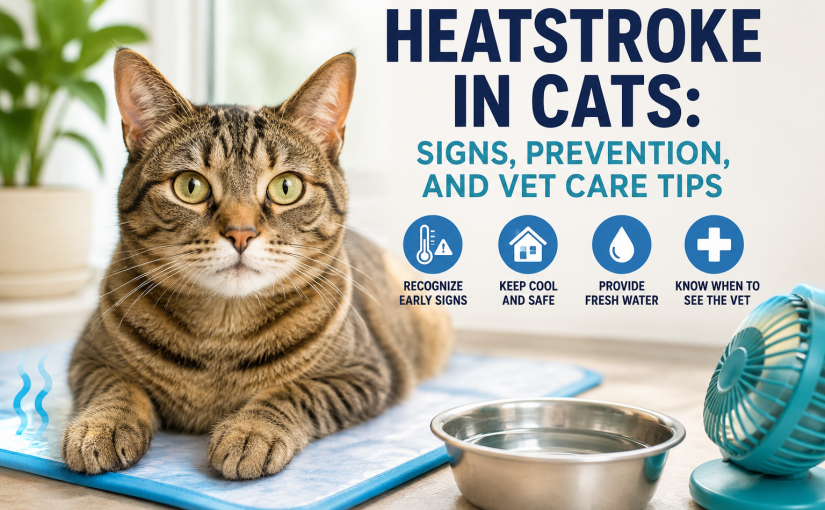
Heatstroke in cats can become a life-threatening emergency when a cat’s body can no longer cool itself safely. While dogs are often discussed more often during hot weather, cats are also vulnerable, especially when they are trapped in warm rooms, cars, garages, carriers, or outdoor spaces without shade. Because cats often hide discomfort, early signs can be easy to miss.
At All Pets Medical, the veterinary team encourages cat owners to treat heat-related changes seriously. Even indoor cats can overheat if air conditioning fails, a screened porch becomes too warm, or a cat is accidentally closed into a hot room. Pet owners who already review seasonal safety topics, such as National Pet Hydration Awareness Month, should also understand how heat risk can affect cats specifically.
Why Heatstroke in Cats Can Happen Quickly
Heatstroke in cats occurs when body temperature rises to an unsafe level and normal cooling methods are not enough. Cats do not sweat the way people do, and panting is not a normal cooling behavior for most resting cats. By the time a cat is open-mouth breathing, drooling, or acting weak, the situation may already be urgent.
Certain cats face higher risk. Senior cats, kittens, overweight cats, flat-faced breeds, long-haired cats, and cats with heart, respiratory, kidney, or mobility problems may struggle more in warm conditions. A wellness exam can help identify health concerns that may make warm weather harder on a cat. Owners can learn more about preventive care through regular wellness exams for dogs and cats.
Cat Overheating Symptoms to Watch For
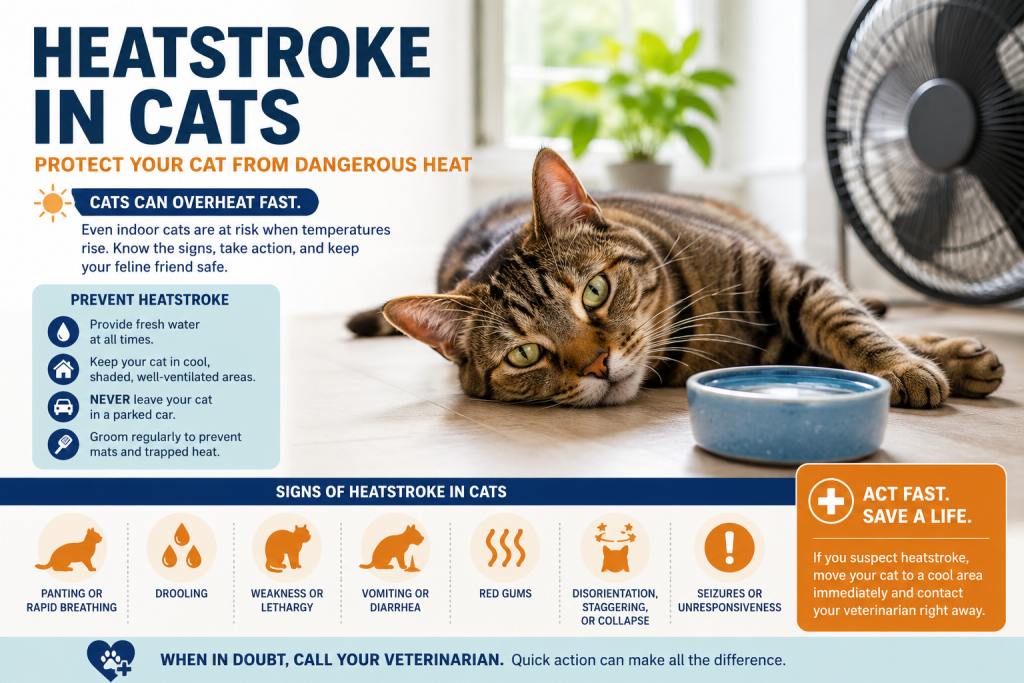
Cat overheating symptoms may begin with subtle behavior changes. A cat may hide, become restless, seek cool flooring, breathe faster than usual, or refuse food. As overheating worsens, owners may notice panting, drooling, vomiting, diarrhea, weakness, stumbling, bright red gums, collapse, or seizures.
Any cat that is breathing with an open mouth after heat exposure needs veterinary attention. Heatstroke in cats can affect the brain, heart, kidneys, liver, and clotting system. Waiting to see whether symptoms improve can increase the risk of serious complications.
Hot Weather Cat Safety at Home
Hot weather cat safety starts indoors. Cats should always have access to fresh water, shaded areas, and cooler rooms. Multi-cat homes may need several water stations so a shy cat is not blocked by another pet. Long-haired cats should be brushed regularly because mats can trap heat and make the coat less effective.
Owners should check laundry rooms, garages, closets, patios, and sunrooms before closing doors. A cat that slips into a warm enclosed space can become distressed quickly. Cats should never be left in parked vehicles, even for a short stop.
Although many summer pet safety articles focus on dogs, related guidance such as how to help your dog in the Texas sun reinforces an important point for all species: shade, water, ventilation, and supervision matter during warm weather.
What to Do If Heatstroke in Cats Is Suspected
If heatstroke in cats is suspected, move the cat to a cool, quiet area immediately. Offer water, but do not force drinking. Use a fan and apply cool, damp towels to the body, especially around the belly, paws, and armpit areas. Do not use ice baths, alcohol, or very cold water, as aggressive cooling can create additional problems.
Call All Pets Medical or the nearest emergency veterinary hospital right away. Emergency vet care for cats may include temperature monitoring, fluids, oxygen support, bloodwork, and treatment for organ stress. Keep the cat calm during transport and avoid repeated handling that increases fear or exertion.
A Safer Summer Routine for Cats
A safe summer routine includes fresh water, cool resting areas, regular grooming, careful room checks, and quick action when symptoms appear. Heatstroke in cats is preventable in many cases, but it becomes dangerous when signs are missed or care is delayed. When a cat seems weak, disoriented, overheated, or unusually quiet during warm weather, contacting a veterinarian is the safest next step.