



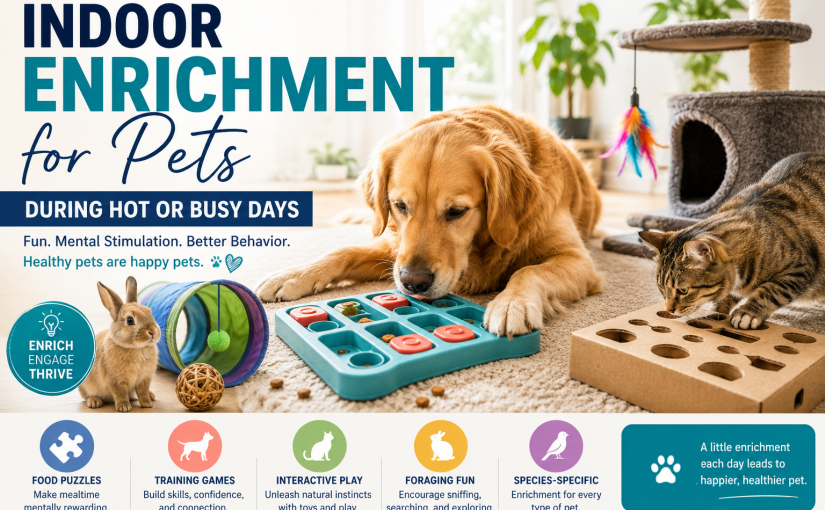
Indoor enrichment for pets gives animals safe ways to move, think, sniff, scratch, chew, climb, and explore when outdoor activity is limited. Hot weather, storms, recovery from illness, mobility changes, or a busy family schedule can all reduce normal activity. Without healthy outlets, pets may become bored, frustrated, anxious, or destructive.
At All Pets Medical, enrichment is viewed as part of whole-pet wellness. A pet’s daily environment affects behavior, comfort, weight, and emotional health. Owners who have read about how music can affect animal behavior may already understand that pets respond to their surroundings. Indoor enrichment builds on that idea by giving pets healthier ways to use their minds and bodies.
Why Indoor Enrichment for Pets Supports Better Behavior
Indoor enrichment for pets helps meet natural needs. Dogs often need scent work, chewing, training, food puzzles, social interaction, and calm rest. Cats need opportunities to scratch, climb, stalk, pounce, hide, perch, and control their space. Birds, rabbits, guinea pigs, and other exotic pets also need species-appropriate activities that encourage natural behavior.
When pets lack appropriate outlets, owners may notice barking, chewing, scratching, overgrooming, pacing, litter box problems, or attention-seeking behavior. These signs can also be related to pain or illness, so sudden changes should be discussed with a veterinarian. Enrichment should support health, not replace medical evaluation.
Food-Based Indoor Pet Activities
Food puzzles are one of the easiest indoor pet activities to start with. A portion of a pet’s daily meal can be used in a puzzle feeder, slow feeder, treat ball, snuffle mat, or hidden food game. For cats, small portions of kibble can be placed in safe areas to encourage searching and movement.
Calories still matter. Treats used for indoor enrichment for pets should be counted as part of the daily diet, especially for pets who are overweight or on a prescription food plan. Pets with dental disease, diabetes, food allergies, or digestive conditions may need specific recommendations before using new treats or chews.
Owners concerned about weight, mobility, or diet can pair enrichment planning with regular wellness exams for dogs and cats so activities match the pet’s medical needs.
Mental Stimulation for Dogs Inside the Home
Mental stimulation for dogs does not need to be complicated. Short training sessions, scent games, hide-and-seek with toys, “find it” games, and calm leash skills practice can all be useful. A five-minute training session can provide more focus and satisfaction than a long period of chaotic play.
Indoor enrichment for pets should be adjusted for age and health. A young, active dog may enjoy scent trails or basic agility using safe household objects. A senior dog may prefer a soft puzzle toy, gentle brushing, or a slow search game on a non-slip floor. Walking remains important for many dogs, but on hot days, indoor work can support the same goal of daily engagement. Owners can connect this with the broader benefits described in Importance Of Walking Your Dog.
Cat Enrichment Ideas That Feel Natural
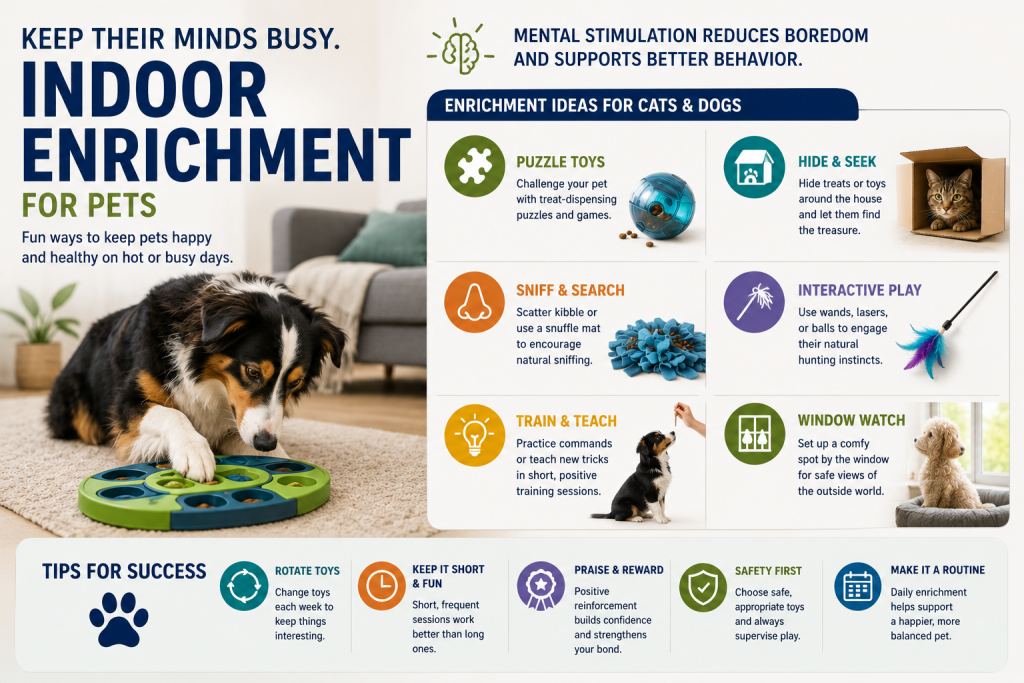
Cat enrichment ideas should reflect feline behavior. Good options include scratching posts, climbing shelves, window perches, cardboard boxes, food puzzles, wand toys, and quiet hiding spaces. Rotating toys every few days can make familiar items feel new again.
String, ribbon, yarn, and feather toys should be supervised because swallowed materials can cause serious problems. Cats also need spaces where they can retreat without being chased, grabbed, or interrupted. Indoor enrichment for pets works best when it gives the animal choice, not forced interaction.
Enrichment for Exotic Pets
Small mammals and birds benefit from enrichment too. Rabbits may enjoy tunnels, safe chew items, and supervised exploration. Guinea pigs often benefit from hideouts and foraging opportunities. Birds may need perches, shredding toys, puzzle feeders, and safe social interaction.
Species matters. Some woods, metals, plants, and household materials are unsafe for certain exotic pets. All Pets Medical can help owners choose enrichment that fits the animal’s species, housing, diet, and health needs. This is especially important for families who also review exotic pet safety topics, such as how to keep exotic pets safe from household toxins.
Building a Routine Pets Can Trust
A simple routine might include a morning food puzzle, quiet midday rest, a short training session, and evening interactive play. Indoor enrichment for pets does not need to fill every minute. It needs to be safe, consistent, and suited to the individual animal. With the right plan, indoor days can support calmer behavior, better confidence, and a healthier home life.