




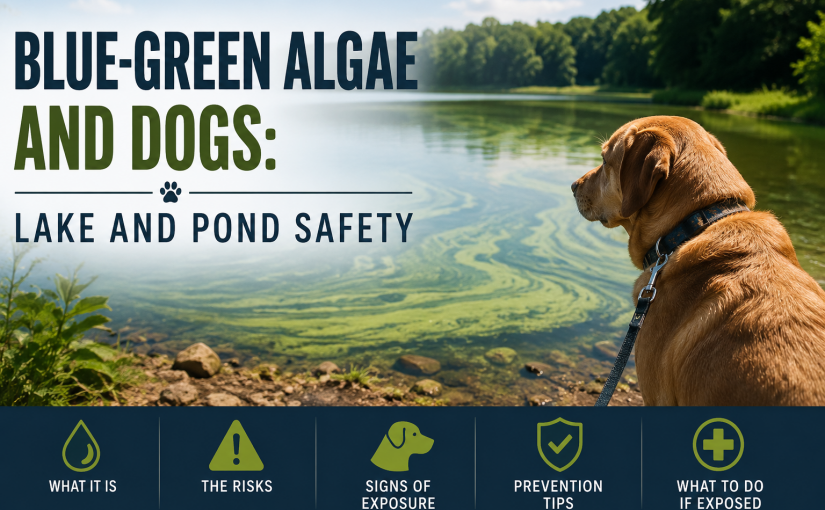
Blue-green algae and dogs can be a dangerous combination during warm weather. Dogs may swallow contaminated water while swimming, playing fetch, drinking from shorelines, or licking their coats after leaving the water. Because some algal toxins can act quickly, prevention is much safer than waiting for symptoms to appear.
All Pets Medical encourages pet owners to be cautious around ponds, lakes, rivers, and other natural water sources. Water play can be healthy and fun, but only when the location is safe. Owners planning warm-weather outings can also review related guidance on water safety tips for dogs before heading outside.
Why Blue-Green Algae and Dogs Are a Serious Concern
Blue-green algae are cyanobacteria that may form harmful blooms in fresh, brackish, or salt water. Some blooms produce toxins that can affect the liver, nervous system, skin, eyes, or digestive tract. A dangerous bloom cannot always be confirmed by sight alone, which is why suspicious water should be avoided.
The risk of blue-green algae and dogs is high because many dogs drink from natural water sources and explore with their mouths. Dogs may also ingest toxins when grooming contaminated fur. Even brief exposure may be concerning if the water is heavily contaminated.
What Toxic Algae in Ponds Can Look Like
Toxic algae in ponds may look like green paint, pea soup, mats, streaks, foam, or scum on the water surface. It may collect near shorelines where dogs are most likely to drink. Some blooms smell unpleasant, while others may not have a strong odor. Water can still be risky even if it does not look dramatic.
Dog lake safety means keeping pets away from discolored water, stagnant water, posted warning areas, dead fish, and dead wildlife. Owners should avoid stormwater ponds, drainage ditches, irrigation water, and natural water with visible surface film. A leash is one of the most useful safety tools near unfamiliar water.
Algal Bloom Symptoms in Dogs
Algal bloom symptoms in dogs may include vomiting, diarrhea, drooling, weakness, pale or yellow gums, trouble breathing, tremors, seizures, collapse, or sudden behavior changes. Signs may appear within minutes to hours after exposure. Some cases progress rapidly and can become fatal.
Because blue-green algae and dogs can involve fast-moving toxicity, owners should not wait to see whether signs improve. Any dog that drank questionable water, swam through scum, or licked algae from the coat should receive veterinary guidance right away.
What to Do After Possible Exposure
If exposure is suspected, remove the dog from the water immediately. Prevent licking and rinse the coat with clean water if it can be done safely. Call All Pets Medical, an emergency veterinary hospital, or a pet poison hotline. Share the location, time of exposure, symptoms, and whether the dog drank the water.
Do not try to make a dog vomit unless a veterinary professional specifically instructs you to do so. There is no reliable home treatment for algal toxin exposure. Veterinary care may include decontamination, fluids, anti-nausea medication, seizure control, liver support, oxygen, and monitoring.
Dog Lake Safety Habits for Warm Weather
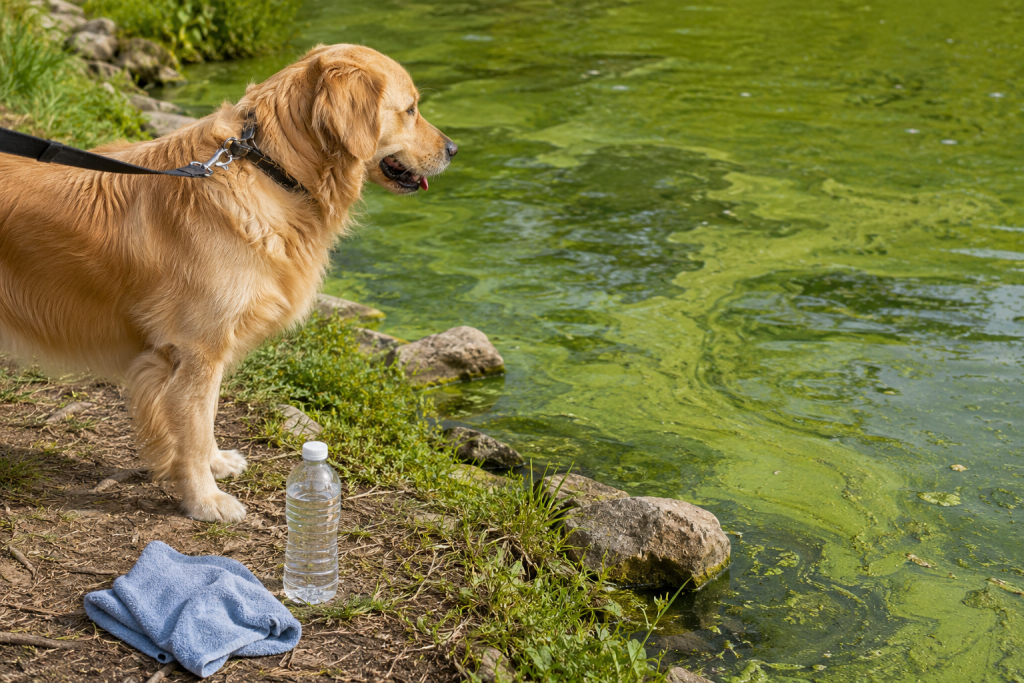
Owners can reduce risk by bringing clean drinking water, using a leash near ponds and lakes, checking local water advisories, and avoiding suspicious water completely. Dogs should not be encouraged to retrieve toys from water that looks cloudy, scummy, oily, foamy, or discolored.
After outdoor activity, rinse the coat and paws, dry the dog thoroughly, and watch for vomiting, weakness, or unusual behavior. Warm weather safety also includes checking pavement and ground surfaces. Owners can combine water precautions with guidance on how to protect your dog’s paws in the summer.
Choosing Safer Summer Outings
Blue-green algae and dogs do not have to stop every outdoor plan, but they do require caution. Choose clean, well-maintained water areas, bring fresh drinking water, keep dogs away from unknown ponds, and respond quickly to illness. Safe summer outings start with prevention, supervision, and a willingness to skip any water that looks questionable.